Notes from a wardrobe
in motion.
We are building Concier in public. Here is what we are learning about hospitality, travel, sustainability, and the way a closet is supposed to work when the city changes every weekend.
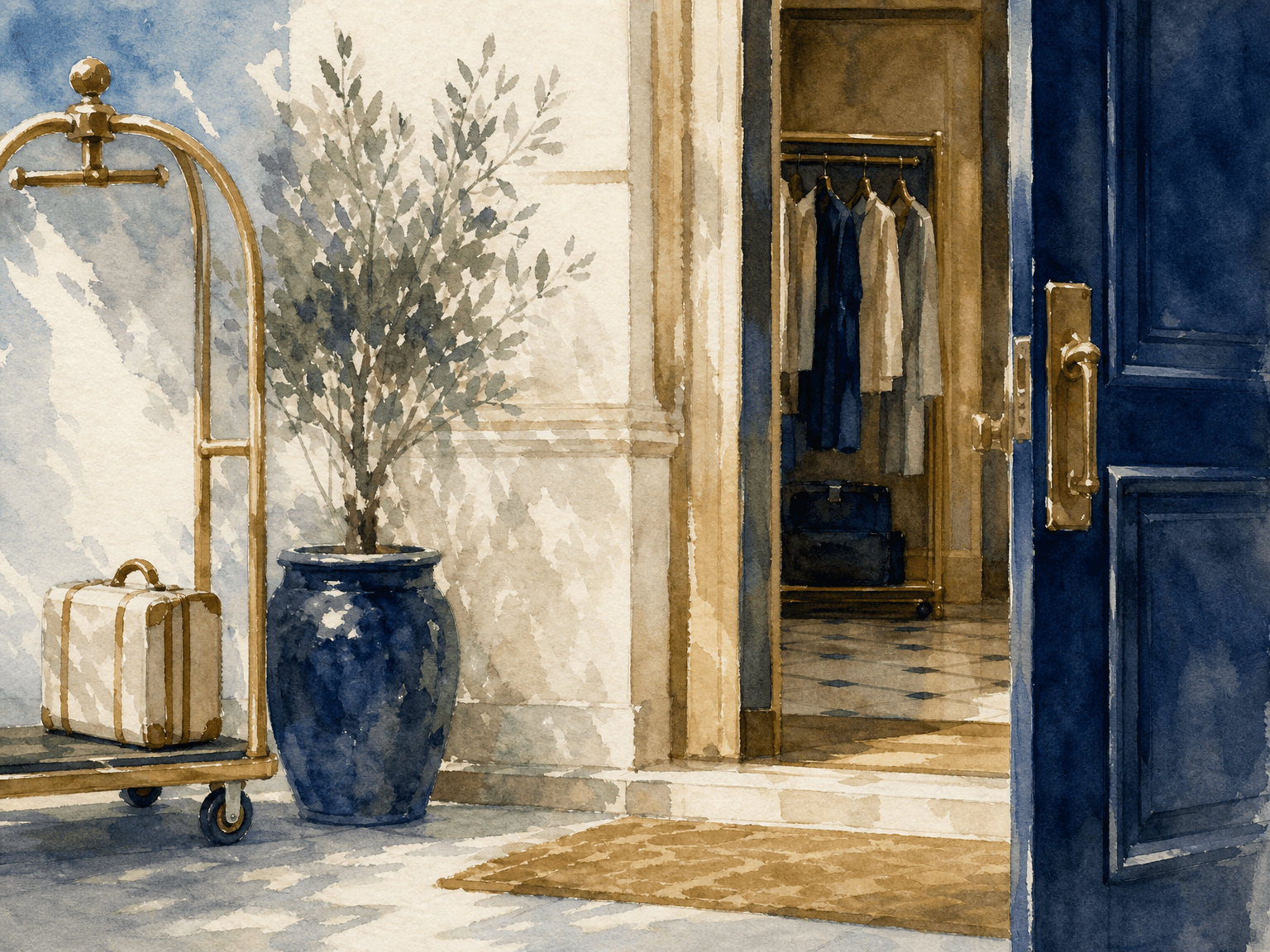
Try on, save to trip, walk in. The Concier flow in four steps.
The Concier flow from app open to door open is four steps: open the app, try on, save to trip, walk in. Here is what each step looks like.

Hotels do not hold inventory in the Concier model. Here is what they hold instead.
Hotels do not buy the Concier closet. Concier holds the inventory, ships it in, and ships it back. Here is what the partner side actually looks like.
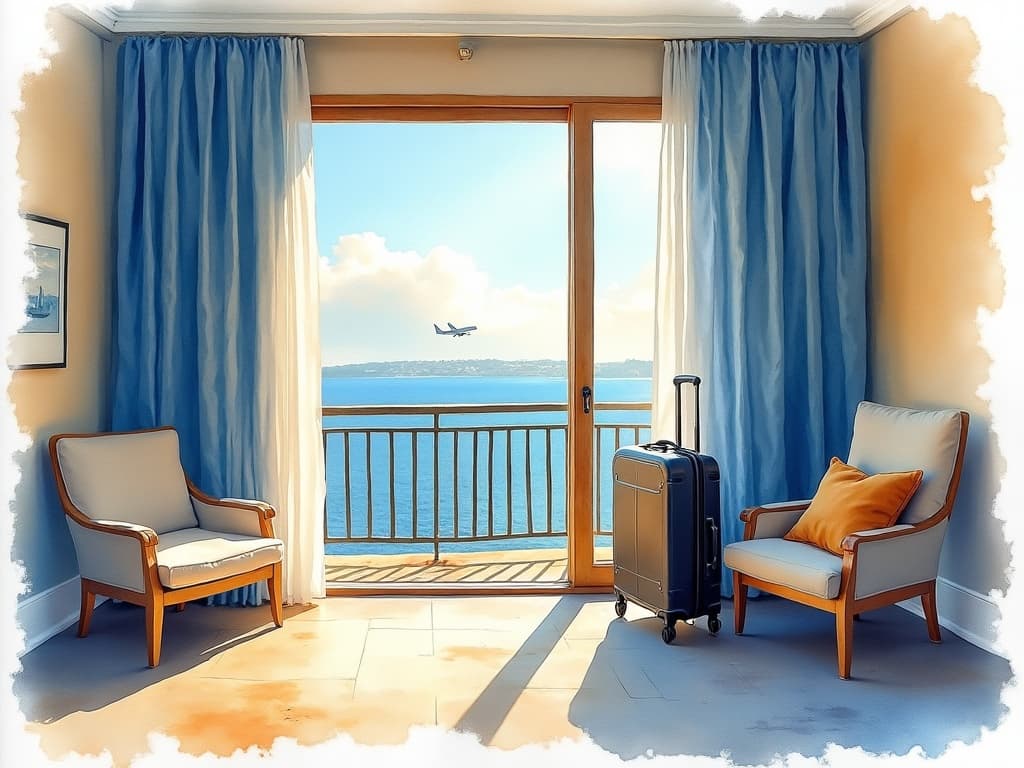
What I mean when I say "a city closet"
A "city closet" is Concier's curated hotel wardrobe, sized for the city you're visiting, refreshed by season, and waiting at your hotel when you arrive.

Beyond Chatbots: What Real Personalization Looks Like in 2026 Hospitality
Hotel personalization in 2026 is not a chatbot that knows your name. It is a guest experience built around real preference data, surfaced at the right moment, delivered without making the guest feel surveilled. Here is what that looks like in practice.

You pick the outfit. AI try-on shows you on yourself. The hotel has it waiting.
AI is doing the personalization layer for almost everything, music, product recommendations, recipes, workouts. For your wardrobe the model is different. You pick the looks yourself, AI try-on lets you see them on your own body before you commit, and the hotel has them waiting when you arrive.
Pharma went all-in on AI. Hospitality is next.
Novo Nordisk, Roche, and Eli Lilly each announced enterprise-wide AI deployments in the first quarter of 2026. Financial services followed in May. The vertical AI pattern is now visible on the calendar. Hospitality is next in line, and the readiness data says most independents are not ready.

Travelers trust AI to plan their trip, not to book it
56% of US leisure travelers used AI to plan a trip in the past twelve months. 66% of them would not let an AI assistant make the booking on their behalf. The gap is not a bug, it is the architecture of the next traveler funnel.

What ten agents for hospitality should actually do
Anthropic shipped ten Claude agent templates for financial services on May 5. Investment banks, asset managers, and insurers got a starter pack. Hospitality is the obvious next vertical, and the ten agents that should exist for hotels are not the ones most people are sketching in pitch decks. Here is the list, and what each one has to be true to ship.

The AI-first hotel is now a real category
BCG and NYU SPS published AI-First Hotels on March 2 2026. Mews framed the year as make-or-break. Canary Technologies's IT-spend data confirms the architecture is being chosen now. The AI-first hotel is no longer a buzzword, it is a category, and independents have a year to join it.

Agentic travel booking just went live. The question is no longer whether it works.
Mindtrip, Sabre, and PayPal flipped the switch on the first end-to-end agentic AI booking platform on May 6. The technical question is settled. The harder question, the one Concier has been built around, is whether travelers actually trust an agent enough to hand over the booking. The gap between industry intent and consumer willingness is not closing on its own.

How AI Agents Will Choose Where Your Guests Stay
58% of hoteliers are now spending more than 10% of their IT budget on AI, and discoverability has climbed to the top of that list. The boutique hotels that win the next five years will be the ones whose machine-legible identity matches the way agents actually search.

The Booking Funnel Is Collapsing Into a Conversation
IDC predicts 30% of travel bookings will be executed by AI agents by 2030. That number reframes the next four years for everyone in hospitality. The five-step booking funnel that has defined every Expedia and Booking.com page for over two decades is being replaced by a single conversation. Here is what that means for hotels, for guests, and for what we are building at Concier.